|
|
|
|
|
|
Crime and PublishingIsobel DixonOn my late-night and late-boarding flight from Newark, NJ to Heathrow, London, I’m already settled in next to the window when a large woman heaves herself into the middle seat, complaining that she and her husband were supposed to have adjoining aisle seats, and “now they’ve gone and put him in a seat right over there”. She waves a hand to the other side of the plane, where a white-haired gentleman looks perfectly happy, quietly reading his New York Times. “And,” she confides, “he hasn’t been able to fly at all since 9/11. This is his first time since then.” In a little while the seating muddle is sorted out, but she has a lot to say in the meantime. She’s lived in New Jersey all her life. It’s her first holiday in London, she’s so excited. They’re staying near Buckingham Palace. It’s too much to hope that they’ll get a glimpse of the Queen while they’re in London, but it’s nice to know she’s close all the same. Literary agent? How nice, she has a niece who works in magazines. And since I work with books, she guesses I must have read the Jack the Ripper book, where Patricia Cornwell sorts out what Scotland Yard couldn’t solve, after all those years? Her guess is wrong actually, and I haven’t, but once her more taciturn spouse is seated next to her, I’m able to return to my own book — Dennis Lehane’s Darkness Take My Hand — and also dwell on the state of publishing in my travel companion’s home country, where, as one publisher put it during my business trip, “The commerce of books has taken a nose-dive.” The atmosphere has certainly shifted since I first went to the Big Apple in 2001, before the planes hit the Twin Towers. Every publisher I spoke to reported that business was a bit of an uphill struggle right now. When war hogs the headlines, there’s less space for reviews; when people are glued to CNN’s coverage of the troops in the field, the sales of books suffer. And the bestseller lists have become a political battleground too. While I was in New York a number of polemical books were causing a stir: Hey Dude, Where’s My Country, Michael Moore’s follow-up to Stupid White Men, and Al Franken’s Lies (and the Lying Liars Who Tell Them) got to the top two spots on the New York Times bestseller list, and Molly Ivins followed her bestselling Shrub: The Short but Happy Political Life of George W. Bush with Bushwhacked: Life in George W. Bush’s America, the need for a follow-up showing the political career not to be as short as she’d hoped. As I write, my New Jersey travel companion has no doubt returned home without a sighting of Her Majesty, while Dubya has been staying right there in the Palace. Rain and protestors dogged his visit, but then he knew enough of Great Britain to expect that — and he knows that every photo of America’s First Couple with a member of the Royal Family could be worth a heap of votes back home. But there opinion seems as firmly divided as at the controversial election count, and to match the outrage of the left, New York publishing has a new phenomenon: the rise of the conservative imprint. Penguin US has just announced the name of their new conservative imprint — Sentinel — chosen because “It symbolizes a tough-minded defense of America’s fundamental values and national interests.” Their launch list includes Michael Allen’s Beacon of Liberty: A Patriot’s History of the United States and Mona Charen’s Great Pretenders: How Liberals Hurt the Ones They Claim They’re Helping. As the candidates vie for poll position, and the bestseller lists reflect the ideological battles between the parties, the New York Times has begun printing a little dagger symbol next to certain titles on the hardcover non-fiction list. The dagger indicates that on this title some of the stores whose figures are used to compile the list are reporting large bulk orders, apparently a tactic intended to rocket the book into the bestseller lists. All in a day’s work as far big-bucks election campaigning across the Atlantic goes. The fiction side of the bestseller list does not seem to gain the dubious benefit of such sugar-daddy bulk-buying. But even without it, non-fiction seems to be grabbing an increasing share of print publicity. Everyone I spoke to agreed that new non-fiction is performing more robustly in the market, despite the downturn, than works of pure imagination (though some would argue that this description could apply equally to some of the aforementioned titles too ...). “The market for fiction by anyone other than the brand-name blockbusters is flat,” an eminent literary publisher told me gloomily.
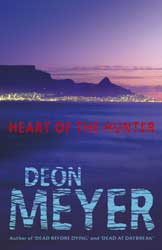
Still, in the swings-and-roundabouts publishing funfair, not every new author has reason to be glum. Deon Meyer, whose Cape Town crime thrillers have been published in several countries around the world, including Britain, has never yet been published in the US. That’s about to change, since AOL Time Warner’s Little Brown imprint, who publish major crime writers like Michael Connelly and George Pelecanos, will publish his latest, Heart of the Hunter (published in Afrikaans as Proteus) next July. This and his first two novels were acquired in a heated auction earlier this year. It seems that there’s never been a better time for serious, intelligent crime writing, and readers are hungy for new horizons. All three vying publishers in the Meyer auction, cited Alexander McCall Smith and his Botswanan Miss Marple, Precious Ramotswe, as an inspiring example. Gradual word-of-mouth built his fan base over the years while he was published only by the small independent Scottish press, Polygon, but McCall Smith has shot to fame and bestseller status since Abacus (an AOL Time Warner imprint) in the UK has published his paperbacks. He is flourishing with Random House in the US too and film rights to The No 1 Ladies Detective Agency have been optioned. (I now treasure my early Polygon editions, “handsold” by a passionate bookseller at London’s wonderful travel bookshop, Daunts.) There’s Swedish writer Henning Mankell too, of course. On the scene for years, loyally published by Harvill, his Inspector Wallander series has now sold over ten million copies worldwide. Mankell writes novels set in Africa as well as his more famous crime novels, and runs the theatre company Teatro Avenida in Maputo. Mankell’s name too was mentioned by the publishers bidding for Meyer — the idea being that there is now clearly more of a taste for crime in an exotic setting, and translation, if well done, need be no barrier. Location, location, location, then, as true in crime as it is in real estate. Whether it’s anything new though, is debatable. After all, the first film adaptations of crime novels I can remember watching (at the drive-in of a small Karoo town) starred that portly Belgian detective (with his indefatigable ‘leetle grey cells’) solving crimes in glamorous places — along the Nile, on the Orient Express. On the small screen Magnum PI’s winding Hawaiian roads and pearly beaches were an essential component of the series’ attraction — a suitably exotic backdrop for its athletic hero. Every story must have its setting, but some settings matter more to the story than others. George Pelecanos’ Washington, early Le Carré’s divided Berlin, Boris Akunin’s 19th century Moscow.
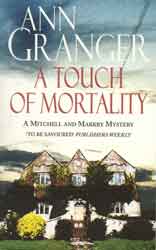
It seems that where crime is concerned, the “cosy” too, can have as much allure as the exotic. Readers love to see the rural idyll threatened — and then restored, when the crime is solved: Miss Marple, sleuthing in her fictional village of St Mary Mead, or Ann Granger’s Mitchell and Markby duo, solving puzzles in the Cotswolds. Interestingly, the traditional English ‘cosies’ seem even more in demand in other countries where the idea of the English village is, truly, exotic. Whether such a life still exists anywhere at all is not the issue. Agatha Christie is incredibly popular in parts of Eastern Europe, and, more up-to-date, Ann Granger is a huge bestseller in Germany, with her latest A Touch of Mortality debuting in the Top Ten this October. Perhaps it is the very power of place that means that crime fiction seems to cross the tough translation barrier with greater ease. Since different locations seem so vital to the genre’s continual reinvention of itself — old crimes told in new ways are refreshed by new settings — fans do have to read further afield. Where once it might have seemed that an Afrikaans author with a South African policeman as the hero of his debut would have as much chance of breaking into the big-time as Pik Botha dancing the lead in the Bolshoi ballet, well, now it seems obvious with hindsight that a cracking good story will always win through. The US publisher’s catalogue page for Heart of the Hunter calls Deon Meyer the new Dennis Lehane — at a time when superb crime writer Lehane has stepped up another level to crime superstardom with the film of Mystic River. The Sunday Telegraph wrote that “crime thrillers from South Africa are rare, so a new book by Deon Meyer is a cause for celebration”. Justice, it seems, does sometimes prevail (and I do at this stage have to, ahem, declare an interest, as Deon Meyer’s agent ...) Back in Britain though there are other crimes for me to contemplate. While Patrica Cornwell has scored a UK record first with simultaneous fiction and non-fiction number ones — her forensic crime novel Blow Fly at the top of the hardback fiction lists, and Portrait of a Killer (that Jack the Ripper Book ...) at number one on the paperback non-fiction lists, the hardback non-fiction place is soon taken — and held for several weeks — by a book achieving stellar sales both sides of the Atlantic. It seems the butler’s done it. Paul Burrell, Diana’s “rock” has now sold over 150,000 copies of his book. I wonder if one of those sales was read on a flight back to Newark, NJ ... Henning Mankell website:
http://www.inspector-wallander.org/author/mankell/default.aspx
Deon Meyer website: http://www.uhambo.co.za
Alexander McCall Smith (on US publisher Random House’s website):
http://www.randomhouse.com/features/mccallsmith
|
|
© Kopiereg in die ontwerp en inhoud van hierdie webruimte behoort aan LitNet, uitgesluit die kopiereg in bydraes wat berus by die outeurs wat sodanige bydraes verskaf. LitNet streef na die plasing van oorspronklike materiaal en na die oop en onbeperkte uitruil van idees en menings. Die menings van bydraers tot hierdie werftuiste is dus hul eie en weerspieël nie noodwendig die mening van die redaksie en bestuur van LitNet nie. LitNet kan ongelukkig ook nie waarborg dat hierdie diens ononderbroke of foutloos sal wees nie en gebruikers wat steun op inligting wat hier verskaf word, doen dit op hul eie risiko. Media24, M-Web, Ligitprops 3042 BK en die bestuur en redaksie van LitNet aanvaar derhalwe geen aanspreeklikheid vir enige regstreekse of onregstreekse verlies of skade wat uit sodanige bydraes of die verskaffing van hierdie diens spruit nie. LitNet is ’n onafhanklike joernaal op die Internet, en word as gesamentlike onderneming deur Ligitprops 3042 BK en Media24 bedryf. |
||