

|
|
|
|
|
|
The Booker, the Nobel, the Buchmesse …Isobel DixonThe northern autumn is a busy time for books and authors. The run-up to Christmas, from September on, is the time for the release of the big hitters. Major biographies, popular histories, celebrity memoirs, and brand-name-favourite novelists collide on the front-of-store tables. Not a great time for the delicate debut novel, which might sink like a stone instead of making its intended splash. I imagine the review offices of the broadsheets are buried under an avalanche of press releases, as weary publicists trek to and fro across the country — Brighton to Berwick-on-Tweed and beyond — with their literary charges, clocking up air and train and road miles like nobody’s business, vying for the attention of the press and the reading public, all the while trying to keep a lid on the authors’ expenses... Exhausting, just to think of it. Over this period, October in particular has its highlights. In Britain, there’s National Poetry Day, which was on the 9th this year, and sadly usually makes more of a media than a sales impact (in the US they do it bigger and better, in the northern spring, making the whole of April Poetry Month). In the international publishing trade, the markets where things still traditionally slow down over the summer, like Italy and Spain, begin to wake up and suddenly, from mid-September on, there is a flurry of translation deals, large and small, gaining pace in the run-up to that grand jamboree of publishing rights trading, the Frankfurt Book Fair. And October is the also month of two big ripple-making prizes — internationally, the Nobel, and in Britain, the Booker. Usually the announcement of the Nobel Prize takes place during the Frankfurt Book Fair and there’s a buzz between publishers’ stands and agents’ tables (in what is now known as the LitAG Centre) about who it will be this year, whether the news will be a boost to an author already internationally famous — like Seamus Heaney (1995’s Laureate), Toni Morrison (1993), or Philip Roth (who is often touted as in the running — maybe in the next few years) — or some more obscure writer not yet, at the time of the award, widely translated — like Chinese dissident novelist Gao Xinjiang (2000) or quirkily ironic Polish poet Wislawa Szymborska (1996). If it’s an already recognised writer, there are beaming publishers wandering through the Fair, delighted that they are publishing a Nobel winner — and in some cases, as with JM Coetzee in Holland, there is more than one publisher who can lay claim to this honour in a country. If it’s a relative unknown, there are rushed queries about whether rights are still available, whether this new winner is a worthy — and marketable — addition to a list. The Nobel, however prestigious, does not always guarantee sales … This year the timing was different, and it was odd to hear the news of the announcement while still in London, days before the publishing world converged on Germany. All the more thrilling though, to know that it went to a South African — for the second time in the Nobel’s history — and it was still the talk of the Buchmesse the following week anyway. In the collegiate atmosphere of the halls of Frankfurt you didn’t have to have a direct link to Coetzee to be congratulated on the prize, only to be South African.
Let’s hope that these laurels inspire other talented though less recognised writers to show the same literary quality, mettle, and perseverance — for none of these were by any means overnight achievements. In fact, in the literary world, the razzle-dazzle of rare overnight success usually needs to be followed up with many more prosaic days of lonely and disheartening slog. It was a long way from Dusklands to Disgrace, and now Elizabeth Costello, for Coetzee, and years of dedication to writing brought varying degrees of success to Galgut and Dangor, in different markets, before the increased reach and acclaim they have achieved with their latest novels (which were incidentally bought by the same UK publisher, Atlantic Books). The successes of the Frankfurt Book Fair, too, are an odd mixture of luck and slog, timing and perseverance. In international publishing there is indeed some glitz, but a lot more grind. If you’re there to buy or sell rights, to make good contacts, or follow up on deals already done (or all of the above), you might find yourself dancing with Umberto Eco at a publishers’ party (or seeing Günter Grass, 1999’s Nobel Laureate, take to the floor after his new novel Last dances was launched at the Fair with music and dance), but you’ll still be at your table or stand (“booth”, if you’re American) bright and early the next morning to carry on with the real work of the Fair, sharing information about books. So while there are a few authors around in the week of the Buchmesse, it is first and foremost a fair for rights trading, not a festival (like Edinburgh or Harbourfront in Toronto) for readers. Over the weekend, hordes of German schoolchildren may descend on the massive, crowded halls in search of attractive freebies, catalogues, or even the hope of a future job, but they’re in the main considered a nuisance, a distraction from the main business of buying and selling translation rights. There may be physical copies of books on display and enticing posters of covers, but selling, less tangibly, the right to publish a book in as many languages as possible is the goal of agents or publishers’ rights directors; while finding the next big thing, or that perfect addition to the next season’s list, is the goal of the commissioning editors and publishers roaming the rows of stands or flitting between agents’ tables. For an agent, the week of relentless talk, in these giant halls where reading meets commerce, requires months of planning. Your days are organised with military precision so that you can make use of every available half-hour appointment slot and ensure that the publisher in front of you, who has been talked at by others till her eyes glaze over, will be persuaded in that half hour that yes, she does want you to send her the manuscript after the Fair, and yes, she will remember your enthusiasm and belief and read this one first, rather than any of the other books piling up on her desk. Sometimes — but rarely these days — a publisher can be persuaded to buy a buzz book at the Fair on the basis of sample material and the word of other like-minded publishers who are also backing this particular horse. More often a deal wrapped up months later can be traced back to an “aha” moment at the Fair — when you can see in the editor’s eyes as he looks at the UK cover and choice review quotes, and hears your impassioned pitch, that the story appeals to him, that it might just work for his market, on their list. All this is part of the brick by brick foundation on an author’s career. The more deals and markets for a book, however small, the greater the satisfaction, and of course, the greater the chance that the writer’s precarious choice of profession may yet prove sustainable full-time. In our agency, at the Frankfurt and London Book Fairs, we’ve had joint meetings with two publishers from the former Yugoslavia, where they have each agreed deals on five titles, each to be published simultaneously in Serbian and in Croatian. We’ve sold Macedonian and Estonian rights at the Fair. Small deals, big thrills, for author and agent. This year was a fine example of the different kinds of deals that make our agency’s work and the enormous expense of time, money and energy at Frankfurt worthwhile. Carole Blake, who agents a Scottish writer called Craig Russell, had closed a UK auction for the first three books of his Hamburg-based crime series just before the Fair. Submission of the first manuscript, Blood eagle, and partial material on the next two books, led to offers from English publishers, with Random House victorious, delighted with their new series with Jan Fabel, the half-Scottish, half-German police chief commissioner hero. The trade press picked up on the press release about the deal, and in the days before the Fair pre-emptive offers (large enough to persuade agent and author that they couldn’t do better elsewhere) were agreed in Norway, Holland and Italy. By the time the Buchmesse began, Blood eagle was already causing a buzz, one of the “books of the Fair”, with editors coming up to us to ask about this new crime writer someone had told them about. A wonderful spin-off of having an enormous number of like-minded publishing people thrown together for a week, exponentially increasing the word of mouth. Not timing one can always achieve through planning alone, though — sometimes what you think is a sure thing may fail to set publishers’ imaginations alight, leaving you to try and fan the flames after the Fair, over several months, or years perhaps. Sometimes a formerly slow burning project may become a wildfire success. At any rate, this was Craig Russell’s Frankfurt, with the market we’d thought would be most skeptical about a Scotsman writing a series with a half-German character, set in a German city, responding with gusto. The German auction progressed every day and closed after the Fair, outstripping even the UK deal. And Carole agreed the Canadian pre-empt at her table when the publisher made an offer to oust all possible Canadian competition. More, no doubt, will follow, when other publishers we spoke to during our meetings read and decide for their own markets.
A great deal of talk, a lot of hard slog, a dash of optimism, a splash of bubbly — not a bad summary of the Book Fair, really. |
|
© Kopiereg in die ontwerp en inhoud van hierdie webruimte behoort aan LitNet, uitgesluit die kopiereg in bydraes wat berus by die outeurs wat sodanige bydraes verskaf. LitNet streef na die plasing van oorspronklike materiaal en na die oop en onbeperkte uitruil van idees en menings. Die menings van bydraers tot hierdie werftuiste is dus hul eie en weerspieël nie noodwendig die mening van die redaksie en bestuur van LitNet nie. LitNet kan ongelukkig ook nie waarborg dat hierdie diens ononderbroke of foutloos sal wees nie en gebruikers wat steun op inligting wat hier verskaf word, doen dit op hul eie risiko. Media24, M-Web, Ligitprops 3042 BK en die bestuur en redaksie van LitNet aanvaar derhalwe geen aanspreeklikheid vir enige regstreekse of onregstreekse verlies of skade wat uit sodanige bydraes of die verskaffing van hierdie diens spruit nie. LitNet is ’n onafhanklike joernaal op die Internet, en word as gesamentlike onderneming deur Ligitprops 3042 BK en Media24 bedryf. |
||




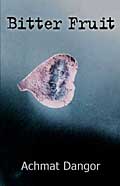 Though Coetzee, like Peter Carey, was surprisingly not on this year’s Man Booker shortlist (despite being the only other author, apart from Carey, to have won the Booker twice), I am sure that this omission pales into insignificance beside the Nobel Academy’s accolade. And for South African literature in general, this is becoming something of a vintage season, as Damon Galgut’s The Good Doctor did feature on the Booker shortlist, and earlier this year Achmat Dangor’s Bitter Fruit was one of the international IMPAC Prize finalists.
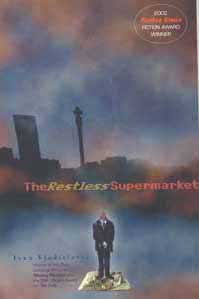 Sometimes the gap between the planting of a seed and the harvest takes longer, but is no less satisfying. Ivan Vladislavic’s poignant and hilarious tour de force The restless supermarket afforded me the most satisfying close to the Fair, as at my very last meeting I agreed the very first translation deal for the book. The editor, Bertram Mourits, has long been an admirer of Ivan’s work and we’d spoken about The restless supermarket several times before — but with its complex wordplay it is a translating challenge, to say the least, and so a tough proposition for a foreign publisher. It takes a certain kind of daring and belief to be the first translating publisher to take the plunge on a book like this, and fortunately Bertram was passionate about the book and able to win the support of colleagues in his new job at Contact. We clinked a glass of sekt to celebrate his first Frankfurt Book Fair buy and his first purchase at his new job, hoping that the good fortune that blessed his first acquisition, Life of PI, at his former house, Prometheus, will come into play again here.